How to tell ash dieback from drought stress in canopy imagery
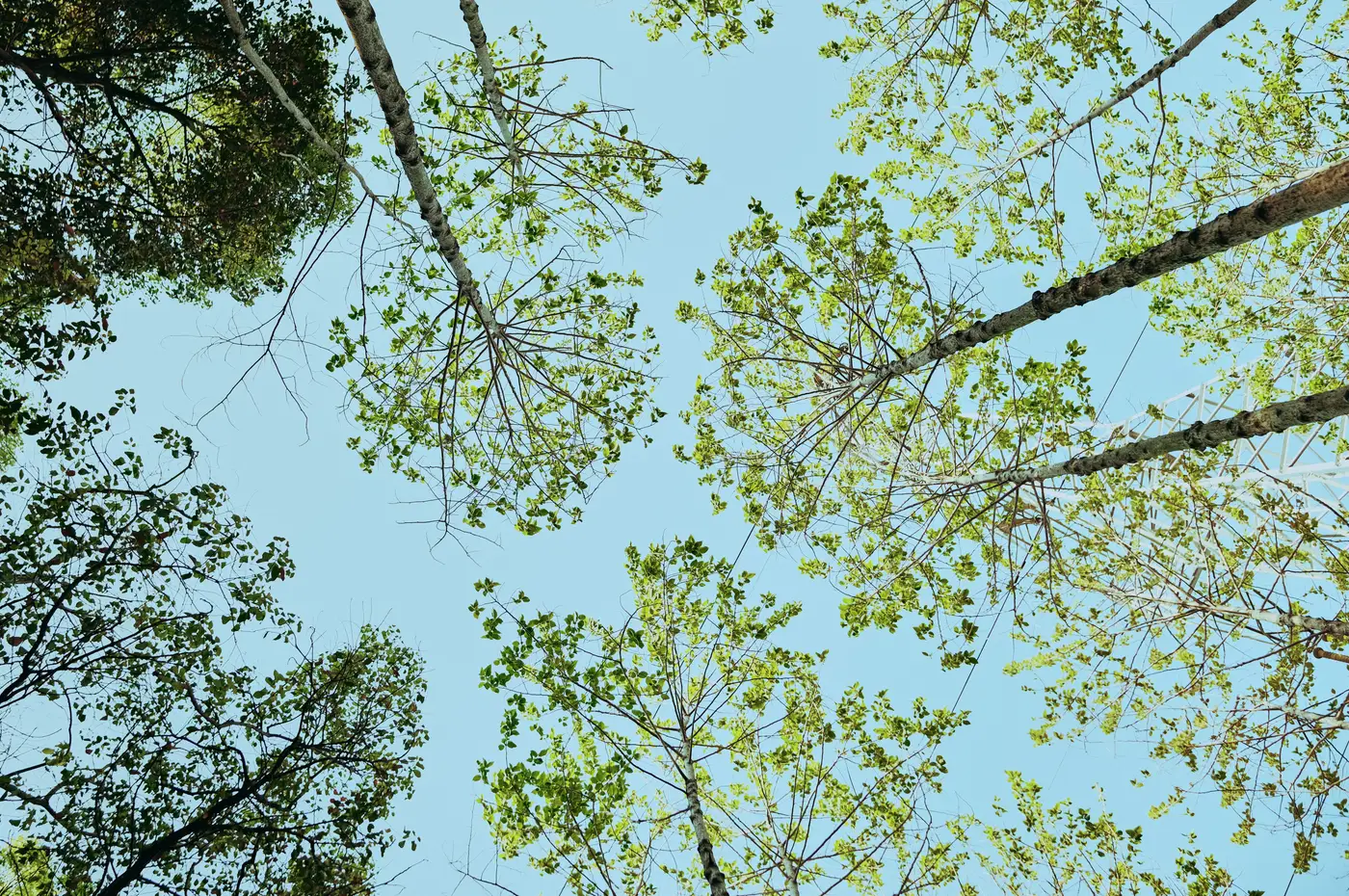
A compartment of ash goes thin over one summer, and the forester writing up that August walk-through often can't tell from the crown alone whether it's Chalara ash dieback or the dry spell that just broke. The distinction carries real weight: dieback triggers a felling licence application and a restocking plan, while drought-driven thinning can green back up once autumn rain returns.
What looks the same from above
Crown transparency is the big one. Both ash dieback and drought stress thin the canopy from the outside in, with die-back starting at the fine twigs and working toward the main branches. Leaf drop comes early in both cases, sometimes by late July rather than October. Epicormic shoots low on the stem show up under either stress, as the tree tries to push new growth from dormant buds when the crown can't carry its own canopy. If you're scanning a block of mature ash on a hot, dry year, none of that alone tells you which one you're looking at.
Where Chalara symptoms and drought stress diverge
The tell that holds up is the lesion, not the crown shape. Chalara fraxinea produces diamond-shaped, sunken lesions at the base of dead side shoots, usually dark brown against the paler bark, and often a bleeding canker further down the stem where the fungus has worked into the wood. Drought stress doesn't do that. A drought-stressed ash thins and drops leaves, but the bark stays clean.
Pattern across the stand is the second split. Chalara moves with infected leaf litter and airborne spores, so it tracks with proximity to other infected ash and with stand density, not with soil. Drought stress tracks with soil depth, slope position, and planting year, and it rarely stops at the species line. If the oak and beech in the same compartment are also thinning, that's drought talking. If only the ash looks rough while everything else around it holds its canopy, that's a stronger case for dieback.
Timing helps too. Drought-driven crown loss follows a specific dry stretch and tends to recover, at least partially, the following growing season if rainfall returns to normal. Chalara symptoms are progressive. A tree that looked 20 percent thin last year and is 50 percent thin this year, with lesions showing up on branches that were clean before, isn't coming back on its own.
Ground-truthing still has the final word
None of this replaces a walk-up inspection. Canopy imagery is good at flagging which crowns to check, not at diagnosing what's wrong with them from a distance. A forester still needs to get under the tree, look for the diamond lesions, check the base of the stem for cankers, and see whether the leaf litter underneath is carrying the fungus into next spring. What imagery changes is how many trees you have to walk to before you find the ones worth checking.
Why you need to know which crowns are ash before any of this works
Here's the part that trips up a lot of compartment surveys: a crown-stress layer built from generic canopy imagery doesn't know which trees are ash and which aren't. In a mixed stand with ash scattered among oak, birch and sycamore, a thinning flag on the wrong tree sends someone out to inspect a sycamore for a disease it can't get. The species layer has to come before the stress layer, or the fieldwork goes to the wrong trees.
That's the piece Tree Species Mapping is built around: a compartment-by-compartment breakdown of which crowns are ash, conifer or something else, built from narrow-band reflectance and seasonal phenology rather than extrapolated from sample plots. Once you know where the ash actually stands in a holding, deciding whether the thinning in front of you is Chalara or just a dry summer gets a lot easier.
If you're planning next season's compartment inventory and want the species breakdown sorted before the dieback checks start, that's the problem Tree Species Mapping is built to solve.