Continuous cover forestry: why a species map matters before the clearfell switch
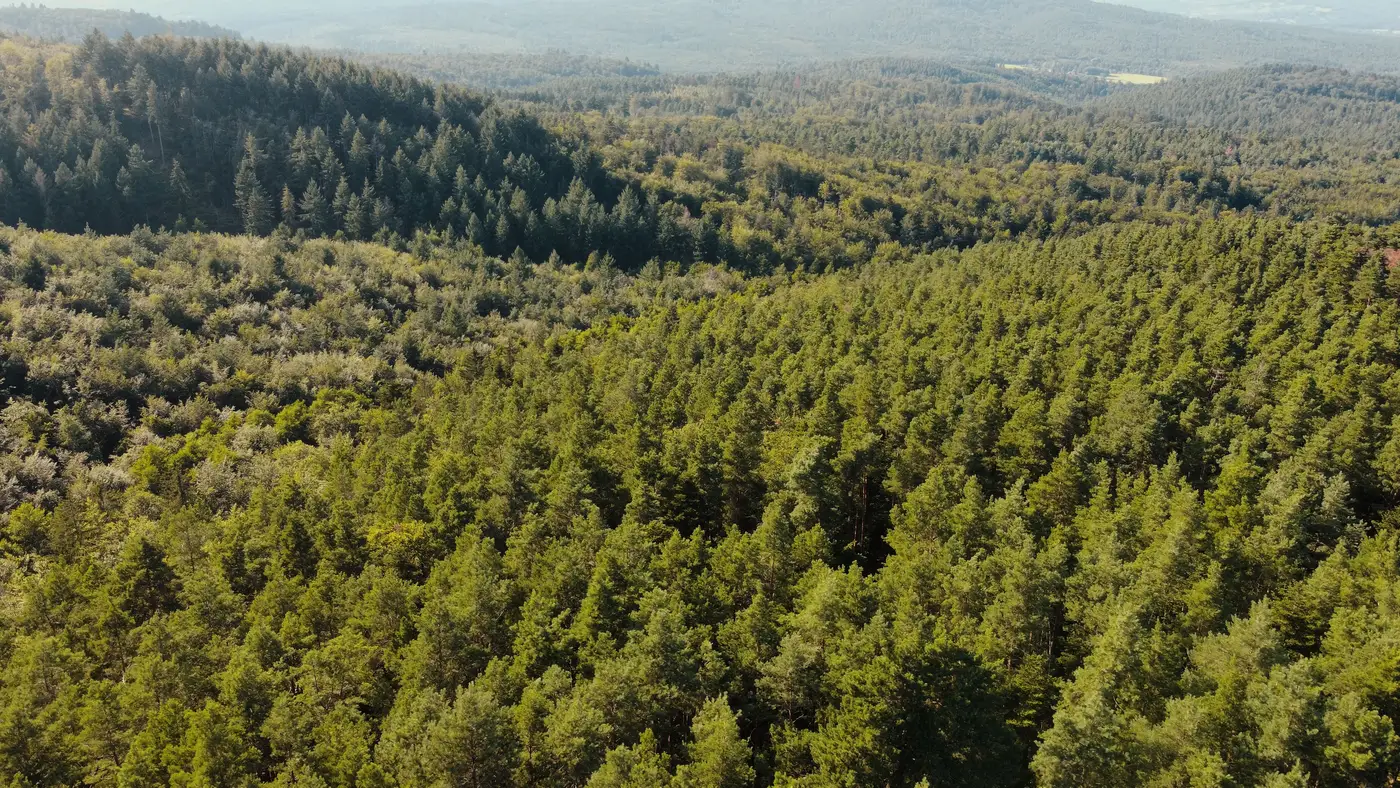
Continuous cover forestry (CCF) keeps a stand under tree cover all the time instead of taking the whole compartment down at rotation age and starting again from bare ground. You work it through group selection, shelterwood felling, or single-tree selection, pulling out mature stems on a cycle and letting natural regeneration or underplanting fill the gaps underneath. The canopy never fully opens, the ground never fully clears, and over a few cycles you end up with an irregular structure of mixed ages rather than one even-aged block.
Clearfell is simpler to plan and simpler to mark out. You know the rotation length, you know the volume at felling, and the next crop goes in on ground that's been cut flat, nothing retained to work around. CCF asks more of you because every decision depends on what's already standing in the understorey and the mid-storey, not just the overstorey you're about to take out. That's where most of the transition work sits, and it's also where a lot of agencies get stuck, because the compartment records they're working from don't tell them what they need to know.
Why the switch depends on knowing species, not just volume
A compartment inventory built from sample plots will give you a stocking figure and a rough species split for the whole compartment. That's fine for a clearfell rotation where the answer at the end is "fell it and replant." It's not fine for CCF, where the answer has to be "retain these stems here, remove those, favour the oak regeneration coming up on the north side, thin out the sycamore crowding it." Those calls change compartment to compartment and sometimes stand to stand within a single compartment. A single species percentage for 40 hectares can't tell you where the broadleaf regeneration is taking hold versus where conifer is still shading it out.
This matters most in the first few cycles of a transition, when you're deciding which compartments are ready for group selection and which still need another felling round before the understorey can take the light. Get the species read wrong at this stage, usually because it's three or four years old and extrapolated from a handful of plots, and you either take out seed trees you needed to keep or leave a conifer nurse crop in place long after the broadleaf beneath it needed full light. Either mistake costs you a cycle, and a cycle in CCF terms can be a decade.
What a compartment-level species layer changes
Wall-to-wall species classification, updated annually, lets you see the broadleaf-conifer split and often the species-to-species breakdown across the whole holding at once, not just where the last plot happened to fall. For a CCF transition specifically, that means you can:
- Flag which compartments have enough advance regeneration of the target species to justify starting group selection this season
- Spot conifer dominance creeping back into compartments you thought were converting
- Match replanting or underplanting stock to what's missing in a compartment rather than what the old record says was planted there
- Pull the species breakdown straight into habitat and biodiversity reporting without running a fresh ground survey first
None of this replaces the forester walking the ground. It replaces the guesswork of deciding where to walk first, and it means the plot data you do collect is confirming a pattern you've already seen on a map rather than being the only evidence you have.
Tree Species Mapping builds that annual species layer from narrow-band reflectance and seasonal phenology, compartment by compartment across the holding, so the composition picture behind a clearfell-to-CCF decision is current rather than a few sample plots stretched over the whole stand. If you're planning the first conversion compartments for next season, it's worth seeing what that layer looks like for your own ground.